

November 13, 2026
Eczema Vs. Psoriasis: How Can I Tell the Difference?
Serving Logan, UT & the Surrounding Cache Valley, including Providence, Brigham City, Smithfield, Hyrum, UT, & Preston, ID
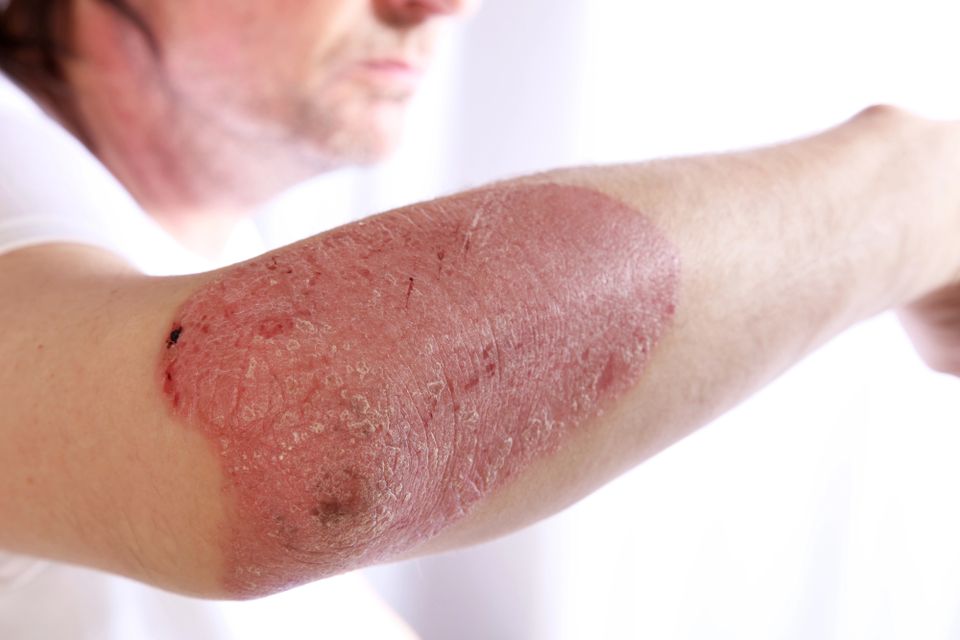
Eczema, psoriasis, contact dermatitis, and even fungal infections can share symptoms such as itching, dryness, scaling, discoloration, and irritation. This blog can help you understand some of the clues that can distinguish one rash from another. Things like where it appears, what it looks like, and how it feels all play a part in differentiating these rashes.
How Can You Tell What Kind of Rash You Have?
Last month, we covered some of the common reasons a rash may keep returning in the fall. Now we are answering the next question: How can you tell what kind of rash you have?
We understand how confusing it can be when you search your rash symptoms, and Google is telling you something like this:
- Red or discolored? Could be several conditions.
- Itchy? Still several possibilities.
- Dry and flaky? That doesn’t narrow it down as much as you might think.
Helpful, right? You've searched three symptoms and somehow ended up with even more questions.
At Lone Pine Dermatology, our providers consider several factors when evaluating a rash, including its appearance, location, and symptoms.
These are four great places to start when identifying your rash and trying to figure out what it may be:
- Location: What part of your body
- Appearance: What it looks like
- Sensation: What it feels like
- Timing: When it appears
Let's get into it.
4 Clues That Can Help Identify a Skin Rash
Before you start comparing one rash to another, take note of these four things.
1. Where Is Your Rash?
One of the first things we consider when evaluating a rash is where it is located. Is it appearing on the scalp, elbows, knees, hands, face, feet, skin folds, or another part of the body? Is it confined to one area or appearing in several places?
2. What Does Your Rash Look Like?
Is the skin dry, flaky, scaly, raised, cracked, blistered, oozing, or shaped in a noticeable pattern?Be careful about relying too heavily on the color descriptions because eczema, psoriasis, and other inflammatory conditions can appear differently depending on your skin tone.
3. How Does Your Rash Feel?
Is it mostly itchy? Does it burn, sting, hurt, or feel tender?The type and intensity of discomfort can provide additional clues.
4. When Does Your Rash Appear?
Does your rash stay around constantly or come and go? Does it appear after using certain products? After wearing certain clothing? After spending lots of time outside or near certain plants?Keeping these four questions in mind will help guide you through your rash research as we start to compare some of the recurring rashes we discussed last month.
Eczema vs. Psoriasis: What’s the Difference?
Eczema and psoriasis both cause itchy, dry, scaly, and inflamed skin. Eczema is often associated with intense itching and dry, irritated skin, while psoriasis commonly causes more well-defined, thick or raised patches of skin with scaling. Where they appear and how they behave provide clues, but the symptoms do overlap.
Eczema (Atopic Dermatitis)
If there is one word commonly associated with eczema, it’s itchy. The itching can become intense enough that scratching irritates the skin even more, which then can lead to even more itching and discomfort. It can become a frustrating itch-scratch cycle that makes the irritation worse. Where eczema shows up can vary, but common areas include the hands, face, neck, and the bends of the elbows and knees.Eczema also tends to have its triggers. Dry weather, heat, sweat, irritating skincare products, certain fabrics, and other environmental factors can all contribute to flare-ups for some people. That’s one reason patients here in Northern Utah may notice their skin acting differently as our weather gets colder and drier.
If eczema is looking like the likely suspect behind your recurring rash, learn more about chronic and winter eczema, including ways to manage those dry-weather flare-ups.
Psoriasis
Psoriasis shows up a little differently. The most common form, plaque psoriasis, typically causes well-defined, raised patches of skin with scales and often appears on the elbows, knees, scalp, or lower back. Psoriasis can itch too, but some people also describe burning, stinging, soreness, or discomfort.
Another clue may actually be somewhere you weren’t looking: your nails. Psoriasis can cause changes in the nails like small pits or dents, discoloration, crumbling, or separation of the nail from the nail bed.
Like eczema, psoriasis can go through periods when symptoms improve and times when they flare. Common triggers for some people’s psoriasis flare-ups include stress, infections, skin injuries, alcohol consumption or smoking, or even certain medications.
Want to dig a little deeper into psoriasis? Read our blog, Stop the Itch: How to Manage Psoriasis Flare-Ups Like a Pro.
What If It’s Not Eczema or Psoriasis?
If it’s not eczema or psoriasis, what is it? Contact dermatitis (which, fun fact, is actually another type of eczema) develops when something touching your skin causes irritation or an allergic reaction. Soaps, fragrances, detergents, cosmetics, jewelry, or certain fabrics can all be potential triggers of contact dermatitis. One helpful clue is where and when the rash develops, especially if it repeatedly appears after contact with a particular product or material.
Fungal infections can leave some more specific clues.
- Ringworm often forms a scaly, itchy, ring-shaped rash with a raised border and clearer skin toward the center.
- Athlete’s foot commonly affects the skin between the toes and can cause itching, burning, peeling, cracking, or scaly skin.
Unlike eczema and psoriasis, these conditions are caused by fungi and can spread to other areas of the body or to other people.
The takeaway? Pay attention to the pattern, location, sensation, and timing. If those clues still leave you stumped, it may be time to let a dermatologist solve the rash mystery.
When Should You Stop Guessing & See a Dermatologist?
You’ve examined it in the mirror, searched pictures online, switched soaps, thought about everything you’ve touched lately, and you may still end up thinking, “I have absolutely no idea what this is.” That’s where a dermatologist can help.
It may be time to have your rash evaluated if it keeps returning, continues to spread or worsen, becomes increasingly uncomfortable, or isn’t improving with what you’ve tried at home. Cracking, bleeding, oozing, or itching that interferes with your sleep or daily activities are also good reasons to get it checked.
Some symptoms call for more urgent attention. A rash accompanied by fever, rapidly spreading redness, significant pain, or signs of infection should be evaluated promptly. Difficulty breathing or swelling of the face, tongue, or throat may indicate a serious allergic reaction and requires emergency medical care.
If you’ve followed the clues and still can’t solve your rash mystery, the providers at Lone Pine Dermatology can help identify what may be causing it and determine an appropriate treatment plan.
Contact Lone Pine Dermatology or call (435) 554-8442 to schedule an appointment.

Make an Appointment
Schedule a consultation right away by calling 435-554-8442.