

October 26, 2026
Why Does My Rash Keep Coming Back? Common Causes of Recurring Rashes in the Fall
Serving Logan, UT & the Surrounding Cache Valley, including Providence, Brigham City, Smithfield, Hyrum, UT, & Preston, ID
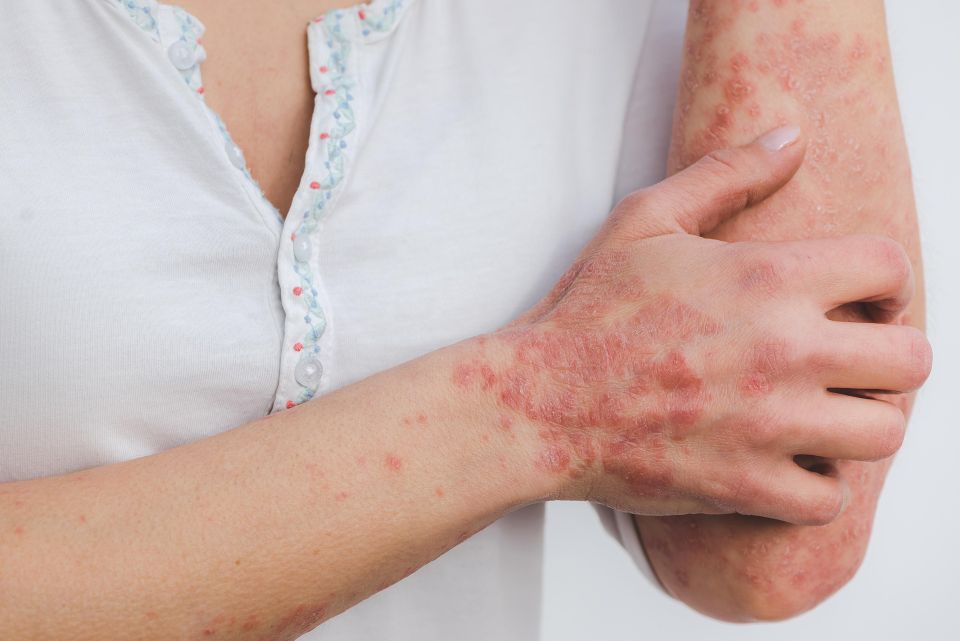
A rash that keeps coming back, spreads, or doesn’t improve with basic at-home treatment may be caused by an underlying skin condition rather than temporary irritation. Common causes of recurring rashes include eczema, psoriasis, contact dermatitis, fungal infections, and other skin conditions.
As we begin creeping into the “brr” months, our skin can start changing. Maybe it starts to feel drier and gets chapped from the colder, even drier Utah air. Maybe it’s getting flaky from the new use of our heaters. Maybe it is irritated from those beloved sweaters that you have busted out and started wearing. Or, maybe you have a rash that keeps coming and going for completely unknown reasons.
Whatever it is, how do you know for sure it’s because of the fall season? How do you know when it’s time to see a dermatologist?
Some of these recurring and persistent rashes and skin irritations could be chronic conditions that could require special treatments or creams. Some of these might be eczema, psoriasis, contact dermatitis, fungal infections, or many other skin conditions, all possibly triggered by the changes in season.
In this blog, the providers at Lone Pine Dermatology want you to feel confident knowing when it is time to reasonably watch your rash at home, and when it is actually time to get a dermatology evaluation. Let’s get into it.
When is a Rash Considered Chronic Rather Than a Temporary Skin Irritation?
There isn’t a set amount of time that, once met, says, “hmm, well NOW it’s a chronic rash.” Some rashes may clear fairly quickly once the source of irritation is gone, while others can linger, improve and return, or continue to flare over time.
Rather than watching the calendar, pay attention to what your skin is doing.
- Is the rash gradually getting better, or does it keep coming back?
- Is it staying in one area or starting to spread?
- Are you dealing with ongoing itching, dryness, scaling, cracking, or inflammation?
- Does an over-the-counter product seem to help for a few days, only for the same symptoms to return?
These patterns can give your dermatologist useful clues about what may be causing the skin irritation. If your rash isn't improving as expected or keeps returning without an obvious explanation, it may be time to have it evaluated.
Why Does My Rash Keep Coming Back?
Getting a diagnosis for your pesky rash can be tricky. Many look similar: red, patchy, dry, flaky, or just plain itchy. While it may seem like it could be any number of things, different skin conditions often require different approaches.
That can be one reason a rash seems to improve for a little while and then comes right back. You may be soothing the itching or dryness without knowing what is actually triggering the problem. In other cases, you may be dealing with a chronic skin condition that naturally goes through periods of improvement and flare-ups.
Pay attention to where the rash appears, how it feels, what seems to make it worse, and whether it repeatedly shows up in the same places. Those details can help a dermatologist narrow down the cause.
So, what could be behind that rash that just won't leave you alone? Here are a few common possibilities:
Common Causes of Chronic or Recurring Rashes
Eczema, Chronic or Winter-Induced (Atopic Dermatitis)
Eczema is a very common skin condition, affecting patients of all ages. It is characterized by dry, itchy, and inflamed skin, where stronger flare-ups can be triggered by dry and cold air. (See the problem here? The Cache Valley hits both of those climate characteristics, especially in the fall!)Eczema can also be caused by allergies, irritants, or sensitivities to the things in your environment. If moisturizing and other at-home care aren't keeping your eczema under control, a dermatologist can recommend treatment based on your symptoms and the severity of your flare-ups. When the cause of a rash isn't clear, additional testing may sometimes be used to help rule out other skin conditions.
Psoriasis
Psoriasis is a skin condition that is actually considered to be an autoimmune disease. This disease makes skin cells grow too quickly, leading to scaly patches of skin.Psoriasis rashes are characterized by:
- red, pink, or purple skin with gray or white scales
- dry, cracked skin that can be tender or even bleed
- extreme itching, burning, or stinging
- pitting, discoloration, or loosening nails from the nail bed
The most common type is plaque psoriasis, which causes patches specifically on the elbows, knees, and scalp. Other types of psoriasis include guttate (triggered by a throat infection), inverse (affecting armpits or groin), pustular (blisters with pus), and erythrodermic (covers the entire body).
To learn more, read our blog: Stop the Itch: How to Manage Psoriasis Flare-Ups Like a Pro.
Contact Dermatitis
In this oncoming season, aside from the weather, our skin tends to come in contact with new things: wool sweaters, coats, boots, and gloves, pumpkin spice soaps and lotions, firewood and bark for your fireplaces, Halloween makeup and fall decor, pumpkin guts, and more. When you think about all these “new” things we are doing, wearing, and touching, figuring out exactly what is irritating your skin may not be as easy as it sounds.Contact dermatitis happens when something that touches your skin causes irritation or triggers an allergic reaction. Avoiding the culprit is an important part of getting the rash under control, but first you have to figure out what that culprit is. If the rash keeps returning, becomes difficult to manage, or isn't improving with basic at-home care (moisturizers, antihistamines, cold compresses), a dermatologist can help identify possible triggers and recommend treatment based on what your skin needs.
Other Skin Rashes a Dermatologist Can Diagnose
Eczema, psoriasis, and contact dermatitis are common rashes we see at Lone Pine Dermatology, but they aren’t the only ones we treat. Many other skin conditions and infections can cause rashes with similar symptoms, including: - seborrheic dermatitis
- fungal infections like ringworm or athlete’s foot
- hives
- perioral dermatitis
- medicine reactions
This is part of what can make an unexplained rash so frustrating. What looks like dry skin or a patch of irritation could have a different cause, especially when it keeps coming back.
If your rash isn't improving, continues to return, starts spreading, or is becoming harder to manage at home, it may be time to have a dermatologist take a look. The team at Lone Pine Dermatology treats patients throughout Cache Valley and surrounding communities at our locations in Providence, Brigham City, and Garden City, Utah, as well as Preston and Montpelier, Idaho.
When you experience any of these pesky rashes that just keep coming back, give us a call at (435) 554-8442 to schedule your appointment. You should be able to enjoy the season, not itch your way through it!
Come back next month for a Part 2 on rashes! We’ll take a closer look at eczema, psoriasis, contact dermatitis, and other common rashes to help you understand how their symptoms can actually differ, and why sometimes it takes a dermatologist to tell them apart.

Make an Appointment
Schedule a consultation right away by calling 435-554-8442.